
Think of hybrid contact centers as the best of both worlds. They blend traditional SIP telephony—which has been the backbone of business calling for years—with WebRTC, the newer technology that lets agents make calls directly through a web browser.
Here’s the simple version: Your agents don’t need fancy desk phones or complicated software installations. They just open their browser, log in, and start taking calls. Meanwhile, the backend uses SIP to handle the heavy lifting—routing calls, connecting with phone carriers, and managing call quality.
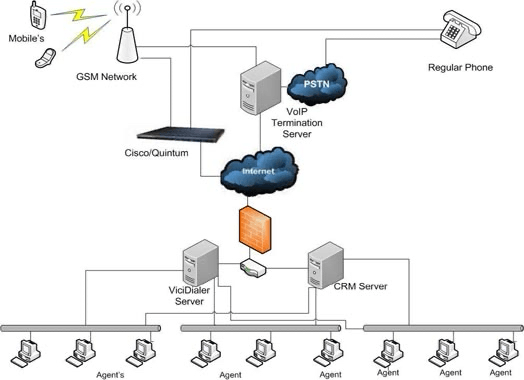
Hybrid contact centers work by connecting these technologies seamlessly. SIP manages the call flow through traditional phone networks, while WebRTC provides the modern, browser-based interface your remote agents actually use.
Why US Businesses Are Switching to Hybrid Contact Centers
Let’s talk numbers. According to recent industry data, contact centers are moving towards cloud-based solutions for better customer engagement, and the WebRTC market alone is expected to grow by $247.7 billion through 2029.
But why the sudden rush? Three big reasons:
Cost Savings That Actually Matter
Traditional phone systems eat up your budget. Hardware costs, maintenance fees, physical infrastructure—it adds up fast. Hybrid contact centers slash these expenses dramatically. When you implement SIP termination for call centers, you can reduce calling costs from $0.05-$0.15 per minute down to just $0.01-$0.03 per minute.
No desk phones. No PBX maintenance. No expensive hardware upgrades every few years.
Remote Work Finally Works
The pandemic taught us one thing: remote work isn’t going anywhere. Resignations fall by 33% when workers shift from full-time in-office to a hybrid schedule with two days remote. Your agents want flexibility, and hybrid contact centers deliver it without compromising call quality.
Whether your team is working from home, the office, or a coffee shop, they get the same reliable experience. And you get access to talent anywhere in the country—or even globally.
Compliance Gets Easier
FCC regulations like STIR/SHAKEN and TCPA aren’t suggestions—they’re requirements. Hybrid contact centers built on modern infrastructure make compliance manageable. The technology includes built-in features for caller ID authentication, opt-out mechanisms, and secure call recording that meets HIPAA and PCI standards.
How SIP and WebRTC Work Together
Here’s where things get interesting. SIP and WebRTC aren’t competitors—they’re teammates.
SIP handles the backend:
- Connects to phone carriers through SIP trunks
- Routes calls efficiently across networks
- Manages large call volumes
- Interfaces with traditional PBX systems
WebRTC handles the frontend:
- Provides browser-based calling
- Eliminates software installation headaches
- Delivers high-quality audio and video
- Works instantly on Chrome, Edge, and Firefox
When you combine them in hybrid contact centers, agents get a simple, clean interface while you maintain professional-grade call routing behind the scenes. WebRTC and SIP integration allows users to communicate across platforms without needing special hardware.
Think of it like driving a car. Your agents see the steering wheel and dashboard (WebRTC), but they don’t need to understand the engine (SIP) to get where they’re going.

Real Benefits for Contact Center Operations Directors
If you’re managing contact center operations, hybrid contact centers solve problems you deal with every day.
Faster Agent Onboarding
New agent starting Monday? With WebRTC-based systems, they don’t need a week of technical setup. Send them a login link, and they’re taking calls within hours. No hardware shipping, no IT tickets, no complicated installations.
Better Call Quality Metrics
Traditional phone systems give you vague quality reports. Hybrid contact centers provide detailed metrics: Answer Seizure Ratios (ASR), Post Dial Delay (PDD), jitter levels, and Mean Opinion Scores (MOS). You can actually see what’s working and what isn’t.
Here’s what good metrics look like:
| Metric | Target Range | What It Means |
| ASR (Answer Seizure Ratio) | Above 65% | More calls actually connect |
| PDD (Post Dial Delay) | Under 3 seconds | Faster connection times |
| Jitter | Under 30ms | Clearer audio quality |
| MOS (Mean Opinion Score) | Above 4.0 | Better overall experience |
Scale Without the Headaches
Need 50 more agents for a product launch? With hybrid contact centers, you’re adding capacity in minutes, not months. No physical infrastructure to install. No lengthy procurement processes. Just scale up (or down) based on actual demand.
IT Managers: Technical Benefits You’ll Love
For IT and network teams, hybrid contact centers simplify life considerably.
No More NAT Traversal Nightmares
WebRTC uses STUN and TURN servers to handle Network Address Translation automatically. Your remote agents don’t need VPNs or complex network configurations. They just need internet access.
Better Security by Default
WebRTC includes end-to-end encryption (DTLS/SRTP) built in. No need to worry about unencrypted voice traffic. Just like understanding cybersecurity lessons from recent data breaches, implementing secure communication infrastructure protects your operation from vulnerabilities that could compromise customer data.
Simplified Failover and Redundancy
With hybrid contact centers, if one carrier route fails, calls automatically switch to backup routes. SIP trunks provide redundant carrier routing, while WebRTC fails over to TURN relays. Together, they ensure high availability without constant IT intervention.
Customer Experience Leaders: Why This Matters
For VP of Customer Experience roles, hybrid contact centers directly impact your key metrics.
Consistent Quality Across Channels
Fragmented systems create fragmented experiences. When you unify communication through hybrid contact centers, customers get consistent quality whether they’re calling, chatting, or video conferencing.
Research shows that 90% of today’s customers expect a brand’s communication to be consistent across channels.
Real-Time Coaching and Monitoring
With browser-based systems, supervisors can monitor calls, provide real-time coaching, and help agents succeed—all from the same platform. No separate monitoring tools. No switching between systems.
Faster Resolution Times
When agents have integrated tools and reliable connections, first-call resolution improves. Fewer dropped calls, clearer audio, and faster connection times mean customers actually get their problems solved.
What Remote Agents Actually Experience
Let’s be honest—if your agents hate the technology, it doesn’t matter how good it is on paper. Hybrid contact centers actually work for the people using them daily.
One-Click Calling
Agent opens browser. Clicks login. Starts taking calls. That’s it. No application downloads, no complicated setup, no IT tickets because something won’t install on their personal laptop.
Better Call Quality on Standard Internet
WebRTC is optimized for variable network conditions. While you’ll want at least 5 Mbps upload/download (20+ Mbps is ideal), the technology adapts to what’s available. Your agents in Bihar or anywhere else can maintain quality connections without enterprise-grade internet.
Device Freedom
Laptop, desktop, even tablet—if it runs a modern browser, it works. Agents use the equipment they already have. No specialized hardware. Just a USB headset for better audio quality.
Security and Compliance: Meeting US Standards
Hybrid contact centers need to meet strict regulatory requirements. Here’s how the technology addresses compliance:
HIPAA Compliance for Healthcare
For healthcare contact centers, protecting patient information isn’t optional. WebRTC’s built-in encryption (DTLS/SRTP) combined with proper SIP trunk security creates a HIPAA-compliant communication environment. No voice data stored locally on agent devices. Secure browser sandboxing prevents unauthorized access.
PCI Compliance for Financial Services
Processing payments over the phone? Hybrid contact centers support pause-and-resume recording, automated payment masking, and encrypted transmission channels. Your agents never hear or store credit card numbers directly.
TCPA and Robocall Regulations
The FCC takes robocall violations seriously—fines exceeded $300 million in recent enforcement actions. Hybrid contact centers integrate with dialer systems to enforce time-zone restrictions, maintain Do Not Call registries, and provide opt-out mechanisms that sync automatically.
Understanding toll-free vs local DIDs for customer trust also helps you maintain proper caller ID presentation and avoid spam tagging that damages your operation.
Integrating Hybrid Contact Centers with Your Existing Stack
You’re not starting from scratch. Hybrid contact centers integrate with the tools you already use.
CRM Integration
Leading platforms offer APIs that sync with Salesforce, HubSpot, Zendesk, and other CRM systems. When a call comes in, your agent sees the customer’s history automatically. When the call ends, everything logs automatically.
Dialer Compatibility
Whether you’re using predictive dialers, preview dialers, or progressive dialers, hybrid contact centers work seamlessly. The SIP backend handles call initiation while WebRTC delivers calls to agent browsers.
Analytics and Reporting
Connect your hybrid contact centers with analytics platforms to track performance metrics, campaign results, and agent productivity. Real-time dashboards show what’s happening right now, while historical reports help you plan for tomorrow.
Real-World Implementation: What to Expect
Let’s walk through what actually happens when you implement hybrid contact centers.
Phase 1: Assessment (Week 1-2)
Audit your current system. What’s working? What’s broken? How many concurrent calls do you handle? What destinations do you call most? What compliance requirements apply to your industry?
Phase 2: Testing (Week 3-4)
Don’t switch everything at once. Start with a pilot group. Test call quality to your actual customer base. Compare metrics against your current system. Let agents provide feedback on the user experience.
Phase 3: Migration (Week 5-8)
Gradually move traffic from old systems to your new hybrid contact centers infrastructure. This phased approach minimizes risk. If something goes wrong, only a portion of your operation is affected.
Phase 4: Optimization (Ongoing)
Monitor quality metrics continuously. Adjust routing based on performance data. Fine-tune configurations. Add capacity as needed. Hybrid contact centers aren’t set-it-and-forget-it—they’re continuously optimizable.
Common Questions About Hybrid Contact Centers
Do agents really need no special equipment?
Correct. A laptop or desktop, a modern browser (Chrome, Edge, or Firefox), a USB headset, and stable internet—that’s the complete list. No desk phones. No special software installations.
What if our internet goes down?
Hybrid contact centers support failover routing. If an agent’s internet drops, calls can automatically redirect to other available agents. You can also configure mobile backup options so agents can continue working from their phones if needed.
Can we keep our existing phone numbers?
Yes. Whether you have toll-free numbers or local DIDs, you can port them to your hybrid contact centers system. The process typically takes a few weeks, but you maintain all your existing numbers and caller ID information.
How does WebRTC handle poor internet connections?
WebRTC includes adaptive bitrate adjustment. If bandwidth drops, the codec automatically adjusts to maintain call quality. While you want at least 5 Mbps, the technology works surprisingly well even on less-than-perfect connections.
Is this really secure enough for sensitive industries?
Absolutely. WebRTC uses the same encryption standards (DTLS/SRTP) as major financial institutions. Combined with proper SIP trunk security and following best technologies for business including cloud and cybersecurity practices, hybrid contact centers meet or exceed security requirements for healthcare, finance, and government sectors.
Can we use this for outbound sales campaigns?
Yes. Auto-dialers and predictive dialers integrate with hybrid contact centers seamlessly. The dialer initiates calls through SIP trunks, then delivers connected calls to agents through WebRTC browsers. You get the efficiency of automated dialing with the simplicity of browser-based calling.
Cost Considerations: What You’ll Actually Pay
Hybrid contact centers pricing varies based on several factors, but here’s a realistic breakdown:
Per-Minute Pricing Model
- Premium routes: $0.008-$0.015 per minute
- Standard routes: $0.004-$0.008 per minute
- Budget routes: $0.001-$0.004 per minute
Most US domestic calling falls into the standard range, making hybrid contact centers significantly cheaper than traditional phone lines.
Channel-Based Pricing Model
- Pay for concurrent call capacity
- Unlimited minutes within your channel limit
- Typical range: $15-$30 per channel per month
- Scales as you add or remove agents
Platform Fees
- SaaS-based hybrid contact centers: $50-$150 per agent per month
- Includes browser-based softphone, basic analytics, and integrations
- Additional features (advanced analytics, AI coaching) cost extra
Hidden Savings
- No desk phone purchases ($150-$300 per unit)
- No PBX maintenance contracts ($10,000-$50,000 annually)
- Reduced IT support needs (60-70% fewer tickets)
- Lower real estate costs (more remote workers)
The Future of Hybrid Contact Centers
Where is this technology heading? Several trends are emerging:
AI-Powered Call Routing
New-gen AI tools can reduce response times, personalize conversations, and help human agents shine by handling the heavy lifting behind the scenes. Future hybrid contact centers will use machine learning to route calls based on customer sentiment, agent expertise, and predicted resolution time.
Immersive Customer Experiences
Video calling is becoming standard. Virtual environments and avatars will push beyond simple video tiles, creating new interop challenges for SIP and WebRTC. Imagine agents sharing screens, co-browsing with customers, or conducting product demos—all through the same hybrid contact centers infrastructure.
Real-Time Translation
Breaking language barriers in real-time. Future systems will translate conversations on the fly, allowing English-speaking agents to help Spanish-speaking customers seamlessly. The technology is already being tested.
Making the Switch: Your Next Steps
Ready to move your contact center into the hybrid era? Here’s your action plan:
Step 1: Benchmark Current Performance
Document your current costs per minute, call quality metrics, and agent productivity numbers. You need baseline data to measure improvement.
Step 2: Define Your Requirements
How many concurrent calls? What destinations? What compliance requirements? What integrations do you need? Answer these questions before talking to providers.
Step 3: Evaluate Providers
Look for providers offering both SIP and WebRTC capabilities. Test their platforms with your actual use cases. Don’t just read marketing materials—actually try the technology.
Step 4: Plan Your Migration
Start small. Pilot with 5-10 agents. Measure everything. Get feedback. Adjust. Then scale gradually.
Step 5: Train Your Team
Even simple systems need explanation. Show agents how to log in, adjust settings, and troubleshoot basic issues. Create quick reference guides.
Step 6: Monitor and Optimize
Once live, watch your metrics closely. Hybrid contact centers provide detailed analytics—use them. Continuously optimize routing, quality settings, and agent assignments based on real data.